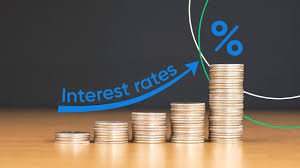
Interest rates are like the heartbeat of the forex market. They quietly move in the background but can create massive waves in currency prices. If you’re serious about forex trading, understanding how interest rates impact currency values is a must.
In this article, we’ll break it down in a fun, easy-to-read, and professional way — perfect for your website readers who want to trade smarter and stay ahead of the game.
📊 What Are Interest Rates in Forex?
In the simplest terms, an interest rate is the cost of borrowing money. Each country’s central bank sets this rate as part of its monetary policy. For example:
- Federal Reserve (USA) → USD interest rate
- European Central Bank (ECB) → EUR interest rate
- Bank of England (BoE) → GBP interest rate
These rates directly influence the value of a currency. Why? Because higher interest rates attract more foreign capital — and more demand usually means a stronger currency.
🔄 The Relationship Between Interest Rates and Forex
Think of interest rates as a magnet for money.
- 📈 Higher interest rates = Stronger currency
- 📉 Lower interest rates = Weaker currency
Here’s how it works:
When a country raises its interest rate, it becomes more attractive to global investors. They want to earn higher returns on their deposits, so they convert their money into that country’s currency.
➡️ This creates more demand for that currency → the price goes up.
On the flip side, if a country cuts rates, investors may move their money elsewhere. Lower demand = lower currency value.
🧠 Real-World Example
Let’s say the Bank of Canada unexpectedly raises its interest rate from 4.5% to 5.0%.
👉 Traders and investors see this as a sign that the Canadian economy is strong.
💹 Result: The Canadian Dollar (CAD) rises against other currencies like the USD or EUR.
📆 Why Traders Watch Interest Rate Decisions Closely
Forex traders keep a close eye on central bank meetings and rate announcements, such as:
- FOMC (Federal Open Market Committee) in the US
- ECB meetings in the Eurozone
- BoE and BoJ policy decisions for the UK and Japan
Even hints of a future rate hike or cut can cause massive volatility in the markets. This is why traders hang on every word in central bank speeches, economic data releases, and press conferences.
📉 When Interest Rates Drop
A central bank may cut interest rates to stimulate a slowing economy. But this often leads to:
- A drop in the value of the currency
- Investors moving funds to countries with higher returns
- Inflation risk increasing in the long term
If traders expect further rate cuts, the currency can fall even before the actual cut happens.
💡 Interest Rate Differentials: A Forex Power Tool
One of the most powerful concepts in forex is the interest rate differential — the difference between the interest rates of two countries.
Example:
If the US interest rate is 5% and Japan’s is 0.1%, traders may prefer to hold USD/JPY long positions to earn the difference.
This strategy is called the carry trade — where traders borrow in a low-interest-rate currency and invest in a high-interest-rate one.
📈 How Interest Rates Affect Forex Pairs
Let’s look at some popular currency pairs and how interest rates typically influence them:
| Currency Pair | What Happens When Rate Increases |
|---|---|
| EUR/USD | USD rises → EUR/USD falls |
| GBP/USD | GBP rises → GBP/USD rises |
| USD/JPY | USD rises → USD/JPY rises |
| AUD/USD | AUD rises → AUD/USD rises |
Always remember: the stronger the interest rate outlook for a currency, the stronger it tends to perform.
📌 Interest Rates & Market Sentiment
Interest rates don’t move in a vacuum. Traders also consider:
- Inflation data (like CPI)
- GDP growth
- Employment figures
- Political stability
Sometimes, even if interest rates rise, a currency may fall if investors are worried about other factors like war, recession, or debt crises.
That’s why smart traders always look at the bigger picture.
🧠 Key Takeaways
- Interest rates are a major driver of currency values.
- Higher interest rates often attract foreign investment, pushing the currency higher.
- Central banks use interest rate changes to control inflation and economic growth.
- Forex traders watch interest rate decisions very closely — even small changes can cause big market moves.
- Strategies like carry trades rely on differences in interest rates between two currencies.